
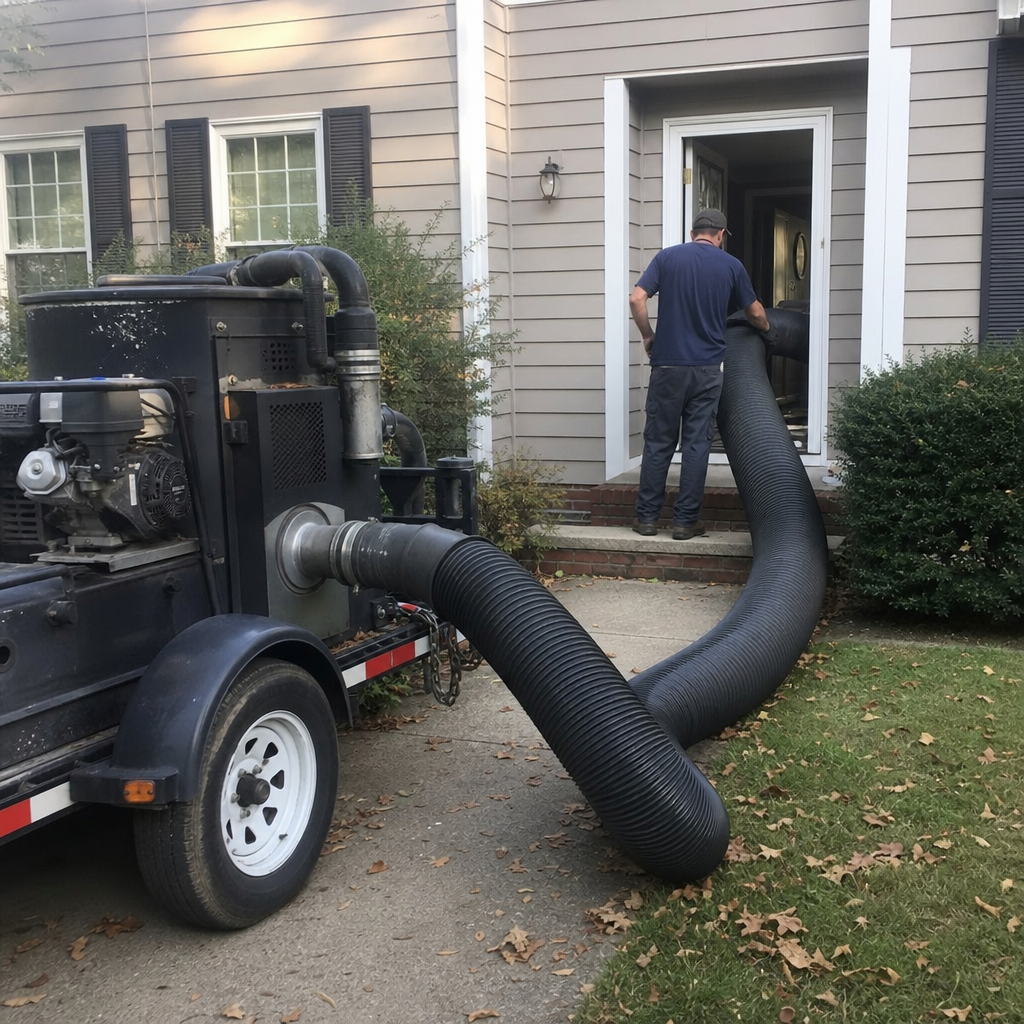
Last updated July 10, 2026
Seasonal Air Duct Cleaning Care for Akron: Year-Round Homeowner’s Guide
The worst time to discover your ducts are contaminated is the first cold day you fire the furnace in October — by then, whatever built up over eight months of AC season is already circulating through every room in your Akron home. We’ve spent 11 years inside duct systems across Summit County, and we’ve learned that Northeast Ohio’s four-season climate doesn’t just stress your HVAC equipment — it creates four distinct contamination cycles inside your ductwork. This guide maps exactly when and why your ducts need attention, what you can check yourself, and when to bring in professional equipment that actually reaches the full length of your system.
Quick Answer
Homeowners in Akron should inspect their duct systems seasonally — checking filters and registers in April, monitoring for summer humidity and mold risk July through September, running a furnace-startup protocol in October, and evaluating particle buildup mid-winter — with professional cleaning every 3–5 years using rotating brush systems, or sooner if you notice musty odors, visible mold, or airflow drops. Timing maintenance to Northeast Ohio’s specific climate cycles prevents the debris accumulation that generic annual schedules miss.
Table of Contents
- Spring: Pollen Loading and Return-Air System Strain
- Summer: Humidity, Condensation, and Mold Risk in Flex Duct
- Fall: The Furnace-Startup Inspection Protocol
- Winter: Static Recirculation and Fine-Particle Compaction
- Stacking Seasonal Checks Against Your Professional Cleaning Interval
- Common Mistakes to Avoid
- When to Call a Professional
- Frequently Asked Questions
Spring: Pollen Loading and Return-Air System Strain
Akron’s tree-pollen season typically peaks from late March through mid-May, with oak, maple, and birch counts regularly exceeding 1,500 grains per cubic meter — among the highest in Ohio. What most homeowners don’t realize: your return-air grille acts like a vacuum intake for everything floating in your living space, and during peak pollen weeks, that loading happens faster than any other period of the year.
Here’s what we’ve observed in 11 years of work across Akron neighborhoods from Firestone Park to Goodyear Heights. Pollen particles are large enough to get trapped in standard 1-inch pleated filters, but small enough that overloaded filters deform and bypass air around their edges. Once that happens, unfiltered air carrying pollen, skin cells, and outdoor dust enters the return plenum and begins coating the upstream surfaces of your duct system — the very areas a basic vent cleaning never touches.
The April Filter and Register Check:
- Pull your return-air filter and hold it to a bright window. If you can’t see light through it clearly, it’s been bypassing air for weeks already.
- Remove floor registers in high-traffic rooms and shine a flashlight into the boot — the short duct section connecting your vent to the main trunk. Look for a fine yellow-green dust coating on the metal walls. That’s pollen residue that made it past the filter.
- Check the return grille itself. If the grille slats are clogged with fuzzy buildup, your system is working harder to pull the same air volume, which strains the blower motor and reduces airflow to distant rooms.
In our experience, Akron homes with mature tree canopy — common in West Akron and the Merriman Valley corridor — see 40–60% faster filter loading than properties in more open areas like Ellet or Kenmore. If you’re replacing filters monthly during pollen season and still seeing buildup, that’s a signal your return-air system is undersized or your duct layout has excessive static pressure. Both problems accelerate contamination and both are diagnosable with proper airflow measurement.
Spring is also when we recommend homeowners in Akron evaluate whether their last professional cleaning is due. If it’s been three years and you’ve never had the full return-side system brushed out, the pollen loading you’re seeing now is layering on top of years of accumulated debris. Our Elite Air Duct Cleaning Service Greater Akron home page details what a full-system cleaning with Rotobrush equipment actually reaches — it’s not the same as a shop-vac at the vent opening.
Summer: Humidity, Condensation, and Mold Risk in Flex Duct
Northeast Ohio summers bring sustained humidity — July and August in Akron average 70–75% relative humidity outdoors, and that moisture finds its way into your duct system through multiple pathways. The most dangerous: condensation on cool duct surfaces in unconditioned spaces, particularly attics and crawl spaces where flex duct runs are common in homes built from the 1970s through the 1990s.
Flex duct — the insulated flexible tubing that connects trunk lines to individual vents — has a fiberglass insulation layer wrapped in a plastic vapor barrier. When that vapor barrier is damaged by rodents, age-cracking, or improper installation, humid attic air contacts the cool inner liner. The result is condensation inside the insulation, where you can’t see it, creating a sustained damp environment perfect for mold colonization.
Warning Signs of Early Mold Colonization:
- A persistent musty smell when the AC first cycles on, especially in the morning after overnight humidity buildup
- Dark spotting or discoloration on ceiling registers in second-floor rooms — these are often the last vents on long attic runs
- Increased allergy symptoms that worsen when you’re home and improve when you’re away for several hours
- Visible water staining or rust on metal duct connections in basement utility rooms
We inspect dozens of Akron homes each summer where homeowners report “the AC smells weird” and discover mold growth 8–12 feet inside flex duct runs. The Nikro equipment we use includes HEPA-contained brushing systems that can navigate these restricted spaces without tearing the flex duct or releasing spores into the living space — a risk with aggressive cleaning methods or DIY attempts.
There’s a specific Akron factor here: the city’s older housing stock, particularly in neighborhoods like Highland Square and North Hill, often has original duct systems with minimal insulation R-values. When these homes get central AC retrofits, the new cooling load can drop supply-air temperatures low enough to cause condensation that wasn’t a problem with heating-only operation. If your home got AC added in the last 10–15 years and you notice summer moisture issues, the duct system may need insulation upgrades or sealing, not just cleaning.
For homeowners wanting proactive monitoring, we recommend a simple mid-summer check: on the hottest, most humid day of August, run your hand along exposed basement ductwork while the AC is cycling. Any surface that feels cool and damp — not just cool — indicates condensation risk. That’s your signal to call for inspection before fall furnace startup redistributes whatever’s growing in those damp sections.
Fall: The Furnace-Startup Inspection Protocol
October in Akron means furnace startup, and it’s the most consequential single moment for your indoor air quality all year. Here’s why: your furnace blower hasn’t run since April or May. During those five-plus months of dormancy, dust, insect debris, rodent droppings, and moisture have settled in the heat exchanger, blower compartment, and supply ductwork. The first time that blower fires at full speed, it mobilizes everything at once — and your supply vents deliver it directly into occupied rooms before any filtration can catch it.
We’ve developed a specific pre-heating-season protocol based on what we’ve seen go wrong in Akron homes. Matthew handles this job personally for our fall inspection calls, and these are the exact checks he performs:
The Three-Sense Furnace Startup Check:
- Smell: The first 10–15 minutes of furnace operation should produce a brief “hot dust” odor that dissipates quickly. If you get a persistent burning smell, electrical odor, or musty/moldy note that strengthens as the system runs, shut it down and call for inspection. A burning smell can indicate debris on the heat exchanger; musty suggests mold in the blower compartment or ductwork.
- Measure: Check the temperature rise across your furnace — the difference between return-air temperature and supply-air temperature. Most Akron homes with standard gas furnaces should see 30–55°F rise. A lower rise often means restricted airflow from dirty blower wheels or clogged evaporator coils (if you have AC). A higher rise can indicate insufficient airflow that stresses the heat exchanger. If you don’t have thermometers to check this, a handheld infrared thermometer at the return grille and a supply vent 10 minutes into a heating cycle gives you a rough reading.
- Look: Remove a supply register in the room nearest the furnace and shine a flashlight into the duct. You’re looking for visible debris — dust bunnies, insect remains, construction debris in newer homes — that would be mobilized by airflow. Then check the return grille nearest the furnace: if it’s coated with gray fuzz, the blower wheel and evaporator coil upstream are likely worse.
The specific Akron context: our fall weather pattern includes warm days and cold nights through late October, which means many homeowners cycle between heating and cooling modes. Each switchover can produce condensation in the evaporator coil pan and adjacent ductwork if drainage isn’t perfect. Standing water in that pan over a mild October weekend is a common mold inoculation point we find when November inspections reveal contamination.
Fall is also when to evaluate your dryer vent — the combination of increased lint production from heavier fall fabrics and longer drying cycles in cooler basement temperatures creates peak fire risk. Our Dryer Vent Cleaning in Mayfield Heights service page details what proper dryer vent inspection includes; the same standards apply across Akron. If your dryer takes more than one cycle to dry a standard load, or if the exterior vent hood doesn’t flap open strongly during operation, lint restriction is already present and worsening.
Winter: Static Recirculation and Fine-Particle Compaction
Once Akron settles into heating season — typically mid-November through March — your house becomes a sealed system. Windows stay closed, doors open minimally, and the same air volume recirculates 5–7 times daily through your duct system. This static recirculation creates a phenomenon we call fine-particle compaction: the smallest particles — skin cells, textile fibers, combustion byproducts from gas appliances, and the residue of cooking aerosols — never fully exit the system. They’re too light to settle in low-velocity sections, so they keep circulating until they electrostatically adhere to duct walls or get trapped in the filter.
Over a full heating season, this loading changes your indoor environment in measurable ways. We hear it from Akron homeowners every February and March: “The house feels stuffy,” “We’re getting more colds,” “The filter turns black in three weeks.” These are symptoms of particle saturation, not necessarily new contamination sources.
Mid-Winter Evaluation: Is Cleaning Warranted?
Not every home needs mid-season intervention. But consider these specific indicators:
- Filter replacement intervals have shortened by 30% or more compared to previous winters — this means particle loading has increased, either from duct reservoir release or new infiltration
- Visible dust accumulation on supply vent louvers within 2–3 weeks of cleaning — this indicates the duct system itself is shedding debris
- Rooms at the end of long duct runs — common in Akron’s ranch-style homes in Springfield and Lakemore — are consistently 3–5°F cooler than thermostat-set temperature, suggesting airflow restriction from blower wheel or duct contamination
- Humidity levels drop below 25% despite running a humidifier, because airborne particles are providing nucleation sites for moisture absorption, effectively competing with your humidification
The equipment distinction matters here. Basic duct cleaning with contact-vacuum methods — a shop vac with a long hose — removes loose debris from the first few feet of ductwork. It does not address the compacted fine-particle layer that builds up over years of static recirculation. The Rotobrush system we use deploys a rotating cable brush with simultaneous vacuum extraction, which physically dislodges adhered material and immediately removes it through HEPA containment. For winter-compacted debris, that’s the difference between surface cleaning and actual system restoration.
One Akron-specific winter factor: homes with original gravity furnaces or early forced-air conversions — still common in Wallhaven and Middlebury — often have oversized ductwork designed for low-velocity gravity flow. When blower motors were added decades later, the increased velocity actually worsened particle suspension and wall adhesion. These systems benefit disproportionately from periodic mechanical brushing, because their design never anticipated the airflow dynamics of modern equipment.
Stacking Seasonal Checks Against Your Professional Cleaning Interval
Here’s the framework we recommend to Akron homeowners: treat seasonal checks as diagnostic monitoring, and professional cleaning as restorative intervention when monitoring indicates it’s needed. The 3–5 year cleaning interval you’ll see from EPA and NADCA guidance is a starting point, not a rule. Your actual interval depends on how these seasonal factors compound in your specific home.
Decision Matrix for Cleaning Timing:
| Seasonal Indicator | Action Threshold | Recommended Response |
|---|---|---|
| Spring pollen bypassing filter (visible yellow coating in return boots) | Occurs 2+ consecutive years | Upgrade filtration + inspect return ductwork; clean if prior cleaning >3 years |
| Summer condensation or musty odor | Any confirmed moisture or mold sign | Immediate inspection; clean + seal/reinsulate affected sections |
| Fall startup producing persistent odor or visible debris | Smell lasts >30 minutes or debris visible in multiple vents | Schedule cleaning before continuous heating; inspect blower wheel and evaporator |
| Winter particle saturation symptoms | Filter life shortened 30%+ or room temperature variance >3°F | Evaluate for mid-season cleaning or defer to spring if manageable |
The key is avoiding unnecessary cleaning — we don’t believe in selling service before the system justifies it — while not deferring so long that contamination causes secondary damage. We’ve cleaned Akron duct systems that went 8–10 years without service and were still functional, and systems that needed intervention after 18 months due to construction debris, water intrusion, or pest activity.
For properties with specific risk factors — finished basements with below-grade ductwork (common in Merriman Valley), homes with multiple pets, or households with allergy-sensitive occupants — we typically recommend leaning toward the 3-year side of the interval. For well-maintained systems in newer construction with good filtration, 5 years is often appropriate.
Our HVAC Cleaning in Mayfield Heights page details how we integrate furnace and coil cleaning with duct service — the full-system approach that addresses contamination at its sources, not just its symptoms. The same methodology applies across our Akron service area.
Common Mistakes to Avoid
- Assuming “duct cleaning” means the same thing from every provider. In the Akron market, prices ranging from $89 to $800 often reflect genuinely different scopes of work — vent-only vacuuming versus full trunk line brushing with contained extraction. Ask specifically whether the provider will access and mechanically clean the return plenum, main trunk lines, and branch ducts, or just the first few feet from each vent.
- Ignoring the dryer vent as part of duct system maintenance. Dryer vent restriction is a leading cause of house fires in Summit County, and the lint accumulation pattern correlates with duct contamination — homes with excess airborne particles load dryer vents faster. Cleaning ducts without inspecting the dryer vent misses a critical safety check.
- Running the same cheap fiberglass filter year-round. Akron’s seasonal variation demands filter strategy changes: higher MERV during pollen season, standard pleated during low-loading winter months. A filter that’s “good enough” in January is overwhelmed by April’s pollen load.
- DIY mold treatment with consumer sprays. Applying bleach or antimicrobial products to visible mold in registers without addressing the source moisture and full contamination extent can worsen spore release and mask deeper problems. We’ve found extensive hidden mold in Akron homes where homeowners treated surface spots for months.
- Waiting for “obvious” symptoms before acting. By the time you smell mustiness or see vent debris, contamination has typically progressed well beyond the point of simple cleaning. The seasonal checks in this guide are designed to catch problems before they become symptomatic.
- Treating duct cleaning as an isolated service rather than system maintenance. Leaky ductwork in unconditioned spaces — attics, crawl spaces, garages — pulls in contamination faster than clean ducts can stay clean. Sealing and insulation assessment should accompany any professional cleaning evaluation.
When to Call a Professional
Call for professional inspection when you confirm moisture or mold in any duct section, when seasonal checks reveal debris beyond filter-surface accumulation, when airflow to specific rooms drops measurably, or when it’s been 4+ years since your last mechanical brushing service. These are not DIY situations: proper duct cleaning requires contained extraction equipment to prevent redistribution, and mold assessment requires source identification that goes beyond visible spots.
Matthew handles this job personally — the same person who built the business over 11 years is the technician who arrives with the Rotobrush and Nikro equipment, diagnoses your specific system configuration, and performs the work. That’s a different accountability model than dispatch services where the technician changes visit to visit.
Elite Air Duct Cleaning Service Greater Akron offers free estimates in Akron — call (866) 970-8150. We’ll inspect your full system, explain what we find without pressure, and recommend only the service your ducts actually need.
Frequently Asked Questions
Most whole-house duct cleaning services in the Akron area range from $400 to $800 for a standard residential system, with pricing varying by home size, duct accessibility, and whether additional services like dryer vent cleaning or sanitizing are included. Be wary of prices below $300 — they typically indicate vent-only vacuuming without trunk line access or contained extraction equipment. Call (866) 970-8150 for an exact quote — estimates are free.
Every 3–5 years for most homes, with seasonal self-checks in between to catch problems early. Homes with pets, allergy-sensitive occupants, below-grade ductwork, or recent construction should lean toward 3 years. The seasonal monitoring framework in this guide helps you determine whether your specific system needs attention sooner.
You can and should perform seasonal filter changes, register cleaning, and visual inspections, but mechanical cleaning of internal duct surfaces requires professional equipment. Consumer-grade vacuums and brush kits lack the HEPA containment, reach, and extraction power to clean full trunk lines without redistributing debris into your living space. For the contained brushing that actually restores system cleanliness, professional service is necessary.
New furnace installation is actually an ideal time for duct cleaning — you’re connecting clean equipment to a system that may have years of accumulated debris. We’ve seen Akron homeowners replace furnaces and immediately contaminate the new blower with old duct residue. Coordinate cleaning within 30 days of furnace replacement for best results.
Duct cleaning addresses the distribution network — trunk lines, branch ducts, and vents. HVAC cleaning includes the mechanical components: blower wheel, evaporator coil, heat exchanger, and condensate system. For comprehensive restoration, both are typically needed, which is why our Air Duct Cleaning in Mayfield Heights service integrates full HVAC component cleaning with ductwork service. The same combined approach is available across Akron.
Cleaning alone doesn’t solve humidity issues, but it removes the organic debris that mold requires for colonization, and inspection during cleaning identifies moisture pathways — leaky duct seams, missing insulation, condensate drainage problems — that are the root cause. For Akron’s humid summers, we often recommend cleaning plus sealing and insulation assessment as an integrated solution.
The Bottom Line
Akron’s four-season climate creates distinct duct contamination cycles that a generic annual schedule misses. Monitor your system through the seasonal framework in this guide — pollen loading in spring, humidity risk in summer, startup debris in fall, and particle compaction in winter — and use professional cleaning every 3–5 years as restorative intervention when monitoring indicates it’s needed. The goal isn’t maximum cleaning frequency; it’s matching your maintenance to your system’s actual condition, verified by specific checks rather than calendar dates. With 387 verified reviews and 11 years of hands-on experience across every Akron neighborhood, we’ve built our practice on this principle: diagnose accurately, recommend honestly, and let the work speak for itself.
Ready to evaluate your duct system? Call Elite Air Duct Cleaning Service Greater Akron at (866) 970-8150 for a free estimate. Matthew Gonzalez will inspect your system personally, explain what seasonal factors are affecting your specific home, and recommend only the service your ducts actually need — no more, no less.
Written by Matthew Gonzalez, Owner & Lead Technician at Elite Air Duct Cleaning Service Greater Akron, serving Akron since 2015.