
Is Air Duct Cleaning Worth It in Akron? For Most Older Homes, Yes — Here’s the Honest Threshold
Air duct cleaning is worth it in Akron if your home was built before 1970, your furnace runs six-plus months a year, or you can see debris around your vents — and it’s often not worth it if you have a sealed, modern system with no visible contamination and you’re just chasing a vague “air quality” concern. If you’re weighing the investment, see our breakdown of how much air duct cleaning costs in Akron, OH for 2026. The difference matters because Akron’s housing stock, climate, and industrial history create debris loads that national EPA guidance simply wasn’t written for. If you’re unsure where your home falls, call us at (866) 970-8150 and we’ll tell you straight.
Why the Generic “It Depends” Answer Fails Akron Homeowners
The EPA’s cautious stance — that duct cleaning doesn’t need to be routine and should be done only as needed — assumes a baseline of modern construction, moderate heating seasons, and no unusual particulate history. That describes a 1995 subdivision in Columbus. It doesn’t describe a 1925 bungalow in Goodyear Heights where the gravity furnace was ripped out in 1968 and replaced with a forced-air blower shoved into an octopus-style trunk line that nobody’s cleaned since the Nixon administration.
We’ve been inside duct systems across Greater Akron for eleven years, and the variation is stark. A ranch built in Green in 1987 with properly sized, sealed ductwork? Often the cleaning is maintenance, not urgent. A two-story in Firestone Park with original 1930s metal trunks patched with sheet metal screws and duct tape? That’s a different conversation entirely — and it’s one we have several times a week.
Matthew Gonzalez, our owner and lead technician, grew up in Firestone Park and still lives ten minutes from his grade school. He’s seen the inside of enough local ductwork to know that Akron’s “worth it” calculation has three factors most national advice ignores:
- Converted octopus systems: Pre-war homes retrofitted from gravity furnaces left oversized, irregular trunk lines that act as sediment sumps — debris compacts in corners and low-velocity zones that modern duct-cleaning equipment sometimes struggles to reach without owner-level expertise
- Snowbelt heating load: Akron furnaces run roughly October through April, often 30% more annual hours than inland Ohio cities, accelerating dust, skin cell, and allergen accumulation
- Industrial particulate legacy: Homes in neighborhoods downwind of former rubber and carbon-black plants — Goodyear Heights, Firestone Park, parts of East Akron — have ductwork that accumulated decades of fine particulates through the 1970s, and that residue doesn’t break down or migrate out on its own
The Two Populations: When Cleaning Is High-Value vs. Routine Maintenance
We sort Akron homes into two categories, and the “worth it” answer changes completely between them.
High-Value Cleaning: The Pre-1970, Unmaintained, or Visibly Contaminated System
These are the jobs where customers call us afterward and say they felt a difference within days — not because we’re selling magic, but because the starting point was genuinely bad. You’re in this group if any of these apply:
- Your home was built before 1970 and the ductwork has never been professionally cleaned, or the last cleaning was more than ten years ago
- You can see dust puffing from vents when the blower kicks on, or you’ve noticed dark accumulation around register edges
- You’ve recently completed renovation work — drywall dust, in particular, infiltrates duct seams and settles in trunk lines
- You’ve had rodent or insect activity in the basement or crawl space where ducts run
- Someone in your household has persistent allergy or respiratory symptoms that spike when the furnace runs
In these cases, cleaning removes a genuine load of accumulated debris, and the improvement is measurable — better airflow, reduced blower strain, longer filter life, and often reduced dust settling on surfaces. We use professional-grade Rotobrush and Nikro systems with HEPA containment from Abatement Technologies because hardware-store vacuums can’t generate the agitation and suction these jobs require.
Maintenance-Level Cleaning: The Modern, Sealed, Previously Maintained System
If your home was built after 1990, your ducts were sealed during construction, and you’ve had cleaning within the last five years, the “worth it” calculation shifts. You’re not removing a decade of compacted sediment; you’re maintaining a system that’s already relatively clean. The value here is preventive — catching small leaks before they worsen, verifying that previous sealing is holding, and removing the incremental buildup that happens even in well-built systems.
We won’t upsell you into a full cleaning if your ducts are genuinely clean. Matthew’s field heuristic is straightforward: if we scope the system and find less than an eighth-inch of loose debris on the trunk floor, we’ll tell you to change your filter, check your return air sealing, and call us back in three to five years. I’ll tell you if it needs cleaning. I’ll also tell you if it doesn’t — that’s just how I’d want someone working in my house.
What Cleaning Actually Changes — And What It Doesn’t
Honest operators should be specific about limits. Here’s what eleven years in Akron ductwork has taught us:
| What duct cleaning improves | What it doesn’t fix |
|---|---|
| Removes accumulated dust, debris, and particulate buildup from trunk and branch lines | Does not seal leaks — a separate service requiring mastic, metal tape, or aerosol sealant |
| Reduces blower motor strain and can improve airflow to distant rooms | Does not redesign undersized ducts causing poor airflow — that’s a design problem |
| Extends filter life by reducing the debris load the filter must capture | Does not eliminate indoor pollution sources — cooking, smoking, pet dander, off-gassing |
| Removes mold-contaminated debris in humid-summer conditions | Does not prevent future mold without addressing humidity and insulation gaps |
| Improves dryer vent safety when bundled with dryer vent cleaning | Does not repair damaged ductwork — torn flex duct or corroded metal needs replacement |
The humid summers in Akron create a specific risk here. Ductwork in unconditioned basements and crawl spaces — common in pre-war homes — runs cold in summer, and when humid outside air contacts that cool metal, condensation forms. We’ve opened trunk lines in August and found active mold growth on debris layers that have been wet-dry cycling for years. Cleaning removes the contaminated material, but if the humidity source isn’t addressed, the problem returns. That’s why we offer duct sealing and insulation assessment as part of our integrated service — cleaning alone is sometimes half the solution.
Akron’s Snowbelt Reality: Why Heating-Season Length Changes the Math
National duct-cleaning frequency guidelines — typically every three to five years — assume moderate climate zones where furnaces run four to five months annually. Akron’s Lake Erie snowbelt location pushes that to six or seven months, with shoulder-season days where the blower runs even when heat isn’t actively called. More runtime means more air volume passing through the system, more filter loading, and more opportunity for debris to migrate from return plenums into supply trunks.
We see the result in February service calls: blower motors laboring against restricted airflow, heat exchangers cycling on high-limit because insufficient air is moving across them, and homeowners who changed their filter in October wondering why it’s already gray and dense. The debris isn’t just in the filter — it’s in the ductwork upstream, and that restriction costs money in gas and electricity until it’s removed.
For homes with converted octopus systems, the problem compounds. Those oversized rectangular trunks were designed for gravity convection — slow, hot air rising naturally — not forced-air velocity. When a blower is retrofitted into that geometry, airflow stalls in corners and horizontal runs, creating exactly the low-velocity zones where debris settles and compacts. We’ve pulled ten-pound sediment cakes from trunks in Highland Square Craftsman homes where the original 1920s layout was never properly adapted.
The Industrial Particulate Angle: Goodyear Heights and Firestone Park
This is the factor almost no national source acknowledges, and it’s specific to Akron’s rubber-industry legacy. Goodyear Heights and Firestone Park were company-built neighborhoods, constructed in the 1910s through 1930s to house workers within walking distance of the plants. Those plants — rubber mixing, tire curing, carbon-black production — operated through the mid-1970s, and emissions standards before the Clean Air Act were minimal.
Fine carbon-black particulate is persistent. It doesn’t degrade, it infiltrates building envelopes through gaps around windows, doors, and foundation penetrations, and it accumulates in ductwork — especially in homes with the leaky, unsealed return pathways common in pre-war construction. We’ve cleaned duct systems in these neighborhoods where the interior metal was coated with a gray-black film that wiped off like soot, and the homeowners had no idea because the contamination was hidden in trunk lines they’d never seen.
This isn’t speculative “toxin” fear-mongering — it’s documented industrial history with a physical residue that professional cleaning removes. If you live in these neighborhoods and your home predates 1975, the “worth it” threshold is lower than the EPA’s generic guidance suggests, because your baseline debris load includes material that simply shouldn’t be in the system.
Matthew’s Field Test: The Honest Assessment We Use on Every Job
After eleven years and nearly four hundred verified reviews, we’ve developed a simple diagnostic that separates “clean it now” from “wait and monitor.” When Matthew arrives at a home, he checks four things before recommending service:
- Visual at the registers: Remove a floor or wall register and inspect the first few feet of branch line with a borescope. Heavy debris, mold staining, or rodent evidence means cleaning is warranted.
- Trunk line access: Cut a small inspection port in the main trunk (sealed afterward) to assess sediment depth and composition. More than a quarter-inch of compacted material is a clear clean signal.
- Blower wheel condition: The blower assembly is downstream of the filter but upstream of the supply ducts. A clogged blower wheel indicates the filter has been overloaded for some time, and debris has migrated past it into the system.
- Return air pathway integrity: Leaky return plenums in basements pull in unfiltered air — construction dust, pet hair, soil gases. If the return is leaky, cleaning helps but sealing helps more, and we’ll recommend both.
This assessment is free. We don’t charge to look, and we don’t pressure to book. The goal is to give you a fact-based answer to “is it worth it” for your specific home — not a generic yes or no.
What the Process Looks Like When You Hire Elite Air Duct Cleaning
If the assessment shows cleaning is warranted, here’s what happens:
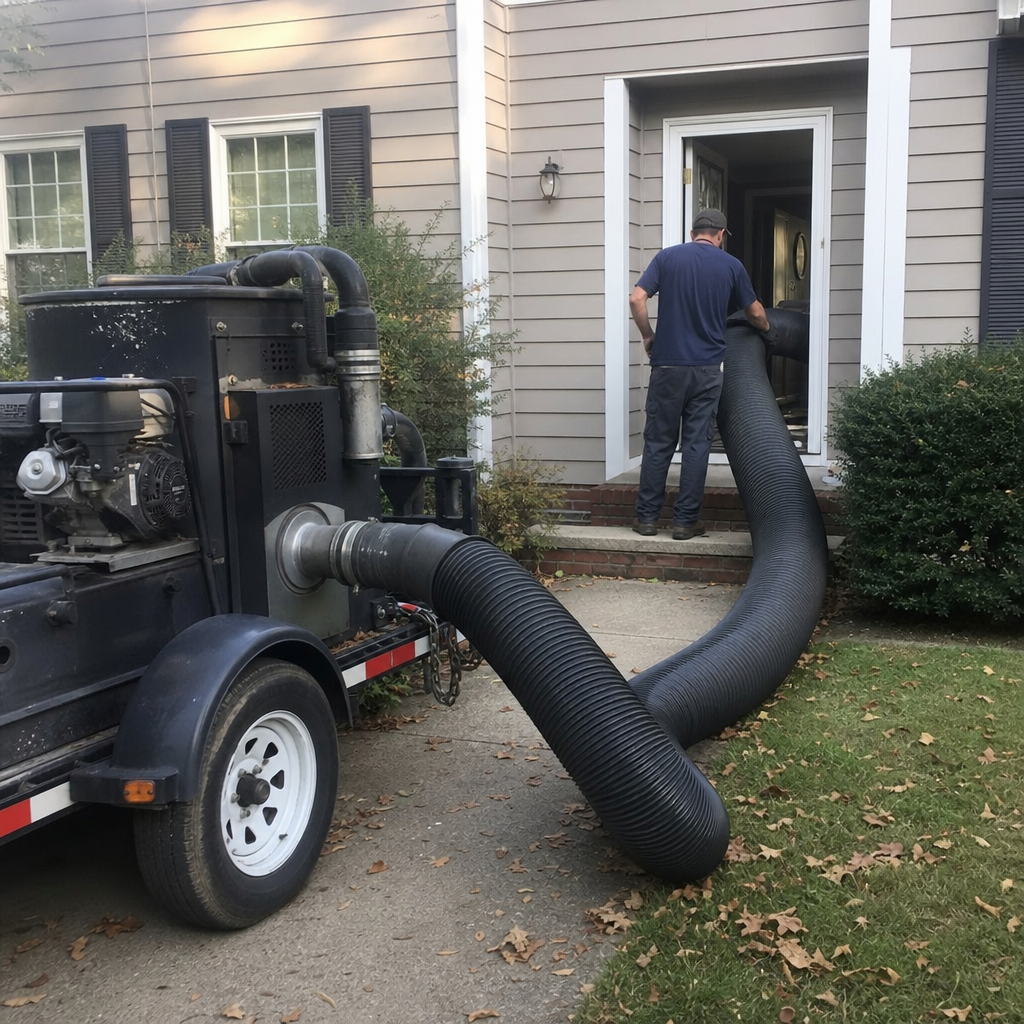
Matthew handles the job personally — not a dispatched crew you haven’t met. He arrives with Rotobrush contact-cleaning systems for branch lines and Nikro high-velocity equipment for main trunks, plus HEPA air scrubbers from Abatement Technologies to protect your home during the process. The scope includes all supply and return ductwork, the blower assembly, and the coil if accessible.
For sanitizing, we use Guardsman-brand treatments with documented efficacy — not generic “fogging” with unverifiable chemistry. Air Duct Cleaning in our full-service format also includes dryer vent cleaning, which we bundle because the dryer vent fire risk is real and most HVAC cleaners skip it entirely.
We photograph before and after conditions where accessible, and we show you what we found. No hidden debris, no mystery upsells — just the condition of your system and what we did about it.
FAQs
Professional duct cleaning in Akron typically ranges from $400 to $800 for a standard residential system, with larger homes or heavily contaminated converted octopus systems running higher due to access complexity and time required. For a detailed breakdown, see our guide on Whole House Air Duct Cleaning Cost in Akron, OH. The price is worth it when there’s measurable debris to remove — we’ve had Firestone Park customers tell us their filters last twice as long and their upstairs bedrooms finally get warm after we cleaned sediment-blocked trunks. Call (866) 970-8150 for a free, no-pressure assessment and exact quote based on your home’s specific layout.
It can improve energy costs modestly — usually 5% to 15% in systems where blower restriction was significant — but it’s not a magic bullet for high bills. If budget is a concern, we also offer Affordable Air Duct Cleaning in Akron, OH without cutting corners. Where we see real savings is when cleaning is paired with duct sealing: a leaky return in an unconditioned Akron basement pulls in 35-degree winter air that your furnace then has to heat, and no amount of duct cleaning fixes that heat loss. We’ll tell you during assessment whether your money is better spent on cleaning, sealing, or both.
Given Akron’s extended heating season and older housing stock, we recommend every three to four years for pre-1970 homes with forced-air systems, versus the national five-to-seven-year guideline for modern construction. Homes in Goodyear Heights, Firestone Park, or other neighborhoods with industrial particulate history should lean toward the shorter interval, especially if anyone in the household has respiratory sensitivity. Newer, well-sealed systems in Green or Copley can stretch to five years if filters are changed regularly and no visible contamination appears.
Upgrading your filter and changing it more frequently helps — we recommend MERV 11 to 13 pleated filters changed every 60 to 90 days during heating season — but it doesn’t remove debris already in the trunk lines. Think of it this way: a better filter stops new contamination from entering, but it doesn’t clean out what’s already settled. If your ducts are genuinely loaded, filter upgrades alone won’t restore airflow or reduce blower strain. We can assess which approach makes sense for your system’s current condition — call (866) 970-8150 to schedule.
When You’re Ready for an Honest Answer About Your Home
We’ve built our reputation in Akron on being straight with people — 387 verified reviews averaging 4.9 stars, and a lot of them mention that Matthew told them something they didn’t expect to hear, including “this doesn’t need cleaning yet.” If you’re wondering whether duct cleaning is worth it for your specific home, we’ll look at your system and give you the same honest assessment we’d want in our own houses.
If you’d rather have it looked at, Elite Air Duct Cleaning Service Greater Akron offers a no-pressure assessment in Akron — call (866) 970-8150.
Written by Matthew Gonzalez, Owner & Lead Technician at Elite Air Duct Cleaning Service Greater Akron, serving Akron, OH.